
Parking beneath pine trees can offer welcome shade, but it can also leave behind one of the most stubborn contaminants a vehicle owner will encounter. Pine pitch is sticky, resilient, and capable of bonding tightly to automotive surfaces. Effective exterior car care requires more than simply scrubbing at the affected area. At Dunn’s Auto Detail Salon, our auto detailing professionals use careful removal methods designed to eliminate tree residue while protecting the paint and finish underneath.
Why Pine Pitch Is So Difficult to Remove
Fresh pine pitch may initially look like a small, shiny droplet on the paint. Given enough time, it can harden into a stubborn deposit that attracts dust, pollen, road grime, and other debris. Sun exposure can make the problem more challenging because heat repeatedly softens and hardens the material.
The temptation is often to scrape the pitch away or reach for a strong household cleaner. Both approaches can create additional damage. Scraping can scratch the clear coat, while cleaners that were never designed for automotive finishes may strip protective products or discolor surrounding surfaces.
Professional exterior auto detailing services can address contamination as part of a broader cleaning process that considers the condition of the paint, the age of the residue, and any existing protection on the vehicle.
Why Timing Matters With Tree Sap and Pine Pitch
Pine pitch should ideally be removed sooner rather than later. A fresh deposit is generally easier to address than one that has been sitting through repeated cycles of sunlight, rain, dirt accumulation, and temperature changes.
The concern is not simply that old pitch becomes harder to remove. Contaminants sitting on the finish can interfere with the appearance of the clear coat and may eventually leave behind staining, dullness, or visible outlines after the residue itself is gone.
Marysville drivers who regularly park near evergreens may encounter this problem throughout the year. Checking the hood, roof, trunk, and upper portions of the doors periodically makes it easier to catch deposits before they become heavily bonded.
How Professional Detailers Approach Pine Pitch Removal
Our first priority is determining exactly what we are dealing with. Tree sap, pine pitch, road tar, bug residue, and other bonded contaminants can look similar at a glance, but they do not necessarily respond to the same treatment.
We also consider the surface beneath the contamination. Factory paint, repainted panels, plastic trim, glass, and protective coatings can require different techniques. That evaluation helps us choose an appropriate removal process rather than applying one aggressive product across every surface.
A thorough wash is typically an important part of the process. Loose dirt should be removed before concentrated work begins because rubbing contaminated paint while grit remains on the surface can create fine scratches. Our professional hand wash and detailing approach helps prepare the finish so stubborn deposits can be treated more precisely.
Specialized automotive-safe products can then be used to soften or dissolve pine pitch. Depending on the condition of the deposit, removal may require controlled dwell time and repeated treatment rather than excessive pressure. Working gradually gives our professionals greater control over the process.
Once the residue is removed, we inspect the area again. This step matters because hardened pine pitch can sometimes conceal staining, etching, or other imperfections that only become visible after the surface is clean.
Professional Removal vs. Aggressive At-Home Methods
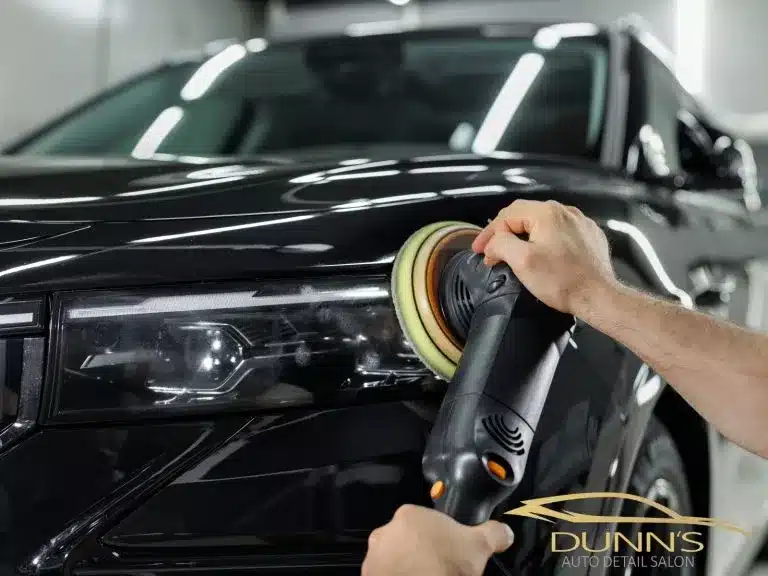
The biggest difference between professional treatment and improvised removal is control. A vehicle owner may successfully remove the sticky material but unintentionally leave scratches, haze, or chemical damage behind.
Common household products are especially unpredictable. Solvents, abrasive cleaners, scraping tools, and rough towels may remove pitch quickly while compromising the finish. Even seemingly minor clear-coat scratches become noticeable under direct sunlight.
Professional detailing focuses on solving the contamination problem without creating a second problem. When residue has already affected the finish, paint correction services may be appropriate for improving certain visible imperfections after the surface has been thoroughly cleaned and evaluated.
That distinction is important. Removing pine pitch and correcting paint damage are not always the same service. Some vehicles need contamination removal only, while others benefit from additional finish restoration.
Can Pine Pitch Permanently Damage Automotive Paint?
The outcome depends on several factors, including how long the pitch has remained on the vehicle, environmental exposure, paint condition, and whether previous removal attempts caused damage.
A relatively fresh deposit on healthy, protected paint may come away cleanly. Older contamination can be more complicated. Once residue has baked onto the finish or affected the clear coat, cleaning alone cannot necessarily restore the original appearance.
This is why we recommend professional evaluation when pine pitch is widespread, hardened, or resistant to gentle cleaning. Continued scrubbing can turn a manageable detailing issue into a paint-correction problem.
Frequently Asked Questions
Can pine pitch damage my car’s paint?
Pine pitch can become increasingly difficult to remove as it hardens and remains exposed to sunlight and weather. Older deposits may leave staining or visible imperfections, especially when the finish is already compromised.
Why shouldn’t I scrape hardened pine pitch off my vehicle?
Scraping can remove the pitch while also scratching or marring the clear coat. Professional detailers use controlled techniques and automotive-safe products intended to loosen stubborn contamination without relying on aggressive scraping.
Can detailing remove old pine pitch completely?
Professional detailing can remove many pine-pitch deposits, but the condition of the paint underneath varies. Once the pitch is removed, the finish can be inspected for staining, etching, scratches, or other imperfections that may require additional correction.
Can paint protection prevent pine pitch from sticking?
Paint protection cannot stop pine pitch from landing on a vehicle, but an appropriate protective layer can create an additional barrier over the clear coat and help make ongoing exterior maintenance easier.
What Happens After the Pine Pitch Is Gone?
Removal is only part of good exterior car care. Once the paint is clean, the finish should be evaluated for remaining contamination and protection needs. A smooth, properly prepared surface also creates a better foundation for waxes, sealants, or longer-lasting protective treatments.
For vehicles frequently parked outdoors, adding a protective layer can make future maintenance easier. Protection cannot prevent pine pitch from landing on the vehicle, but it provides an additional barrier between environmental contamination and the clear coat.
Signs It Is Time to Call an Auto Detailing Professional
A few isolated, fresh spots may seem minor, but professional service becomes particularly valuable when the pitch has hardened, covers multiple panels, has been exposed to prolonged sunlight, or does not release through safe washing.
Professional attention is also advisable if previous removal attempts have left cloudy areas, scratches, discoloration, or sticky residue. At that point, continuing to experiment with stronger chemicals or abrasive tools increases the risk of further damage.
Marysville vehicle owners should also consider professional treatment before applying wax, sealant, or another protective product. Sealing contamination beneath a protective layer defeats the purpose of preparing and protecting the finish.
Preventing a Small Problem From Becoming Expensive
Avoiding trees entirely is not always realistic, particularly when outdoor parking is the only option. The most practical strategy is frequent inspection and timely professional cleaning.
Pay extra attention after windy weather, warm sunny days, or extended parking beneath evergreen trees. Pine pitch can be surprisingly small when it first lands, so looking across the paint from different angles can reveal spots that are easy to overlook.
Routine detailing also gives professionals an opportunity to identify bonded contaminants before they become severe. Maintaining clean, protected paint is generally much easier than correcting a finish after months of environmental exposure and aggressive cleaning attempts.
Give Your Paint the Professional Attention It Needs
Pine pitch that has hardened, spread across several panels, or resisted normal washing is a good reason to bring in experienced help. For professional exterior car care in Marysville, call Dunn’s Auto Detail Salon at (425) 353-4000 to schedule an appointment and let our auto detailing professionals safely address stubborn pine pitch while helping protect your vehicle’s finish.